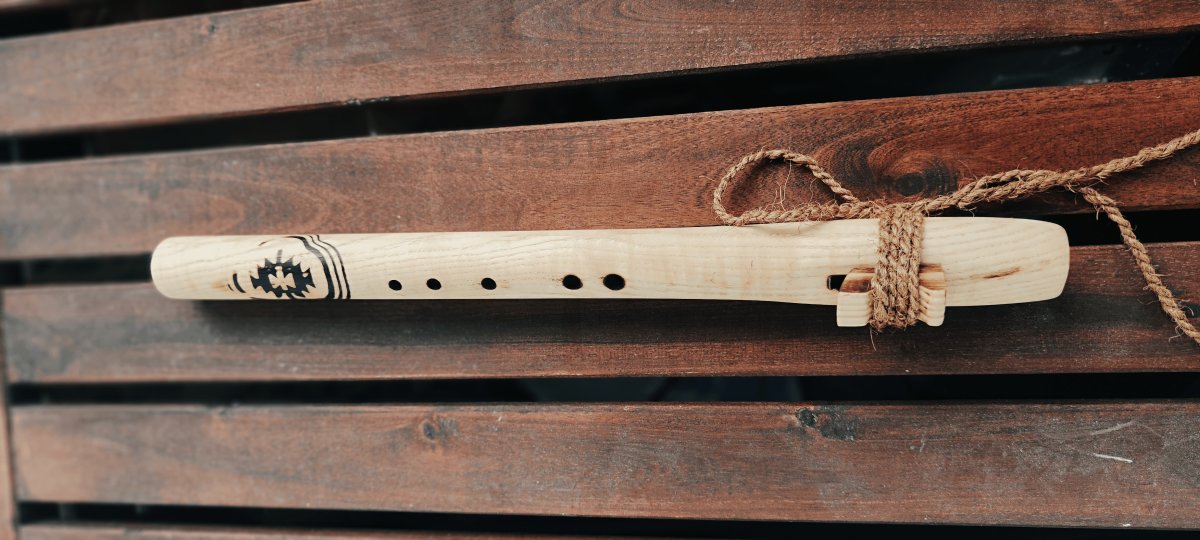
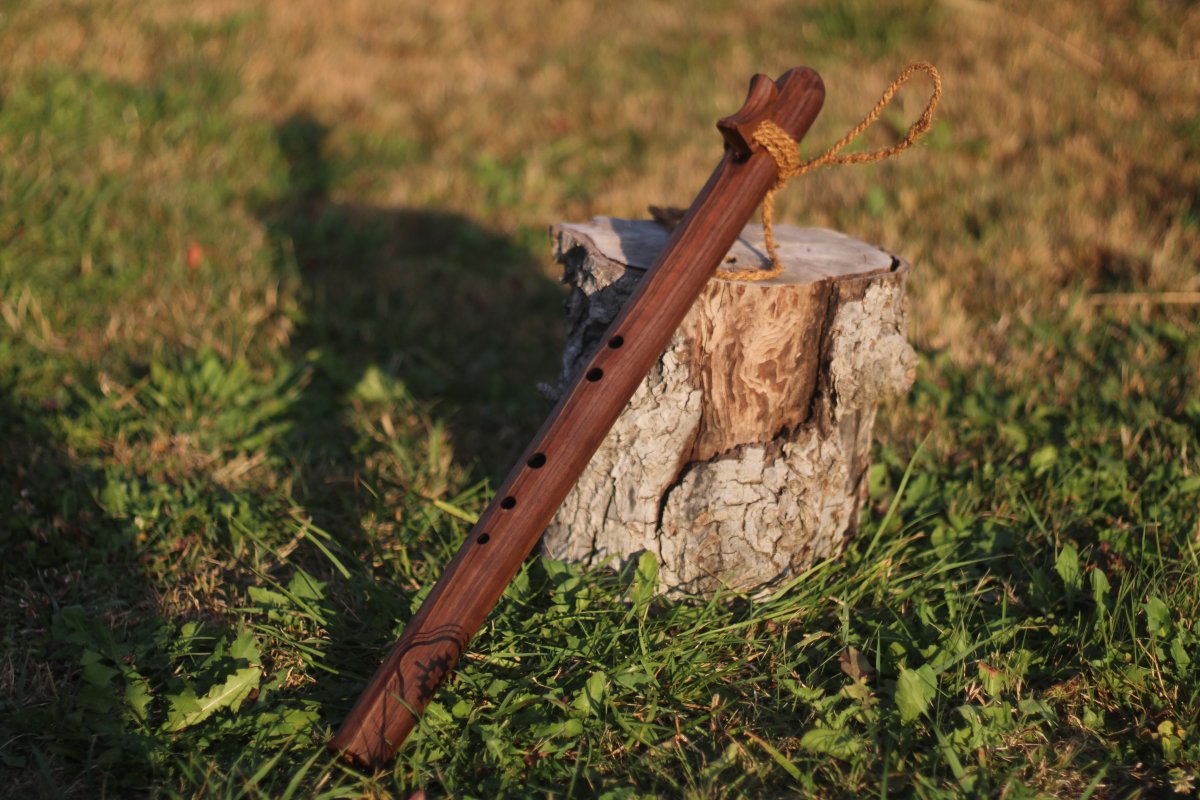
In the modern world we live in, our nervous system is under constant strain. The fast pace of life, daily stress, and rapid routines keep the body in a perpetual state of alertness. That is why we increasingly seek natural, accessible, and pleasant ways to find peace. One of the oldest and most effective tools for achieving deep relaxation lies in a simple wooden instrument — the Native American flute.
Although it has been used for centuries in the tradition of North American indigenous peoples for meditation, emotional expression, and rituals, modern medicine and neurophysiology today confirm what ancient peoples intuitively knew: playing and listening to this flute has a powerful, measurable impact on human health.
1. The Golden Breath: How the Flute Changes Our Breathing
The secret of the Native American flute lies in the way it is played. Unlike some complicated wind instruments, it does not require strenuous pressure. Instead, it calls for slow, steady, and deep exhalation.
During play, a person unconsciously slows the breathing rhythm to approximately 6 breaths per minute (each cycle lasting about 10 seconds). In physiology, this rhythm is known as the respiratory resonant frequency (0.1 Hz).
What happens in the body when we breathe at 0.1 Hz?
When we slow the breath to 10 seconds per cycle, heart rate, blood pressure, and the respiratory system enter perfect synchronization. This phenomenon is called respiratory coherence — the moment when the body expends the least energy while achieving the greatest degree of rest and regeneration.
2. Awakening the Vagus Nerve and Strengthening the Heart
The main coordinator of our inner peace is the vagus nerve — the longest nerve of the autonomic nervous system that connects the brain to the heart, lungs, and digestive organs. When we play the flute and lengthen the exhalation, we activate the vagus nerve, which immediately sends a signal to the heart to slow down.
One of the best indicators of cardiovascular health is Heart Rate Variability (HRV). High HRV means the heart is flexible and resilient to stress. Clinical measurements show that during Native American flute play, HRV values increase by as much as 84%. This means the flute acts as a natural "physiological workout" for strengthening resilience to everyday stressful situations.
3. Changes in the Brain: From Stress to Meditative Peace
Our brain communicates through electrical impulses we call brainwaves. When we are stressed or analytically overloaded, fast Beta waves dominate.
Neurophysiological measurements have carefully tracked what happens in the brain during playing and listening to the deep tones of the Native American flute:
- Surge in Theta waves (4–8 Hz): These waves occur in states of deep meditation, creativity, and transition into sleep. Playing the flute naturally guides the brain into this state without the need for years of meditation experience.
- Increase in Alpha waves (8–12 Hz): Associated with relaxed wakefulness, a state in which we are calm yet focused. They are especially pronounced when playing deep tones.
- Reduction in Beta waves: Even passive listening to solo flute tones reduces excessive mental tension and "brain noise."
4. Support for the Lungs and Mental Health
Besides clear effects on the nervous system, the Native American flute also has direct physical benefits for respiratory health:

Diaphragm Training
Playing encourages proper, abdominal breathing that strengthens the diaphragm, increases lung capacity, and helps people with mild respiratory difficulties.

Natural Antistress
Flute play activates the vagus nerve and increases HRV by up to 84%, making you more resilient to everyday stress.

Deep Sleep & Regeneration
Theta waves (4–8 Hz) naturally induced by the flute help the body enter a state of deep regeneration, similar to the pre-sleep phase.

Better Focus
Alpha waves (8–12 Hz) create a state of "relaxed alertness" — you remain calm yet focused, ideal for work and study.

Blood Pressure Regulation
Breathing at 0.1 Hz (6 breaths/min) synchronises heart rate, blood pressure and lungs — a natural "physiological reset".
How to Start and How to Use It for Health?
The most beautiful characteristic of the Native American flute is its accessibility. It is based on the pentatonic musical scale, which means that whatever you play — it sounds harmonious and pleasant. You do not need to read sheet music or have musical education.
To achieve relaxing health effects, simply set aside 10 to 15 minutes a day. Sit in a comfortable position, close your eyes, inhale deeply through the nose, and let the long, slow exhalation transform your breath into a beautiful, warm wooden tone.
From Hospital Rooms to Everyday Peace
These findings are not confined to laboratories. Today, the Native American flute is used in intensive care units (ICU) worldwide. Patients who listen to this music require less sedation and experience significantly lower levels of anxiety. Even if you are not in a hospital, the same principle applies: the sound of the flute shifts your brainwaves from a state of "analysis and stress" (Beta waves) to a state of "creativity and peace" (Theta and Alpha waves).
Conclusion
The Native American flute is more than a cultural symbol — it is a technology for emotional health centuries old, which modern science has finally confirmed. Whether you decide to learn to play or simply listen, your body will thank you for every "resonant" breath you take with its tones.
Key Scientific References
- Miller, E. B., & Goss, C. F. (2014): Flute Playing Physiology — Clinical applications of the Native American flute in health care settings. Research on HRV and autonomic nervous system impact. arXiv preprint & Flutopedia.
- Miller, E. B., & Goss, C. F. (2015): Trends in physiological metrics during Native American flute playing — Nordic Journal of Music Therapy, Taylor & Francis.
- Galanter, M., et al.: The effects of music therapy on autonomic function and brainwave coherence — Studies on brainwaves and emotional regulation.
- JAMA Internal Medicine: Music interventions for patients in intensive care units — Clinical evidence on stress reduction in critically ill patients.
- Wheeler, J. J. (2006): The physiology of flute playing — Physiological analysis of respiratory coherence and 0.1 Hz frequency.