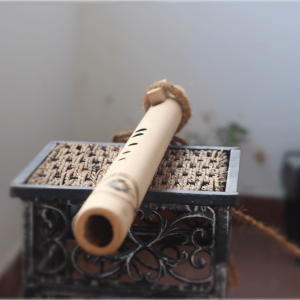
Your flute sounded great yesterday, and today it hisses, jumps or makes no tone at all? The cause is almost always something small and easy to fix. These are the things that most often go wrong and how to fix them in a few minutes.
1. The block (bird) has moved
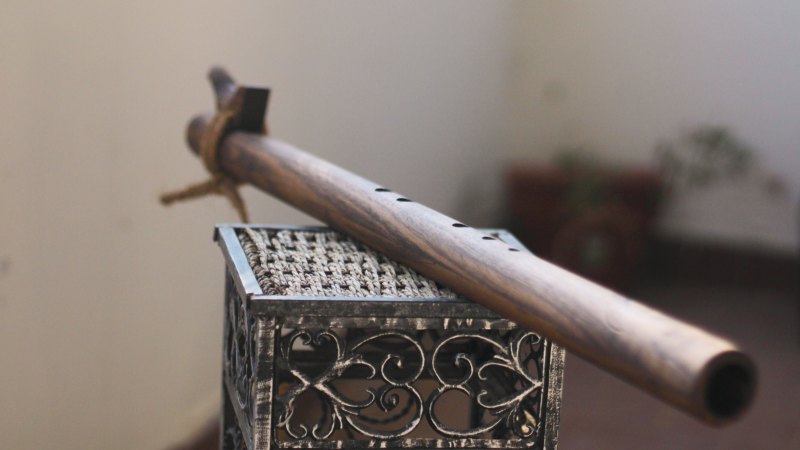
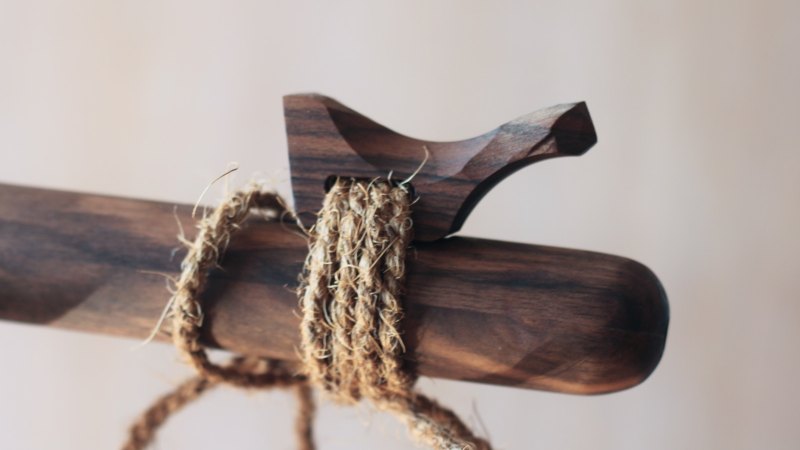
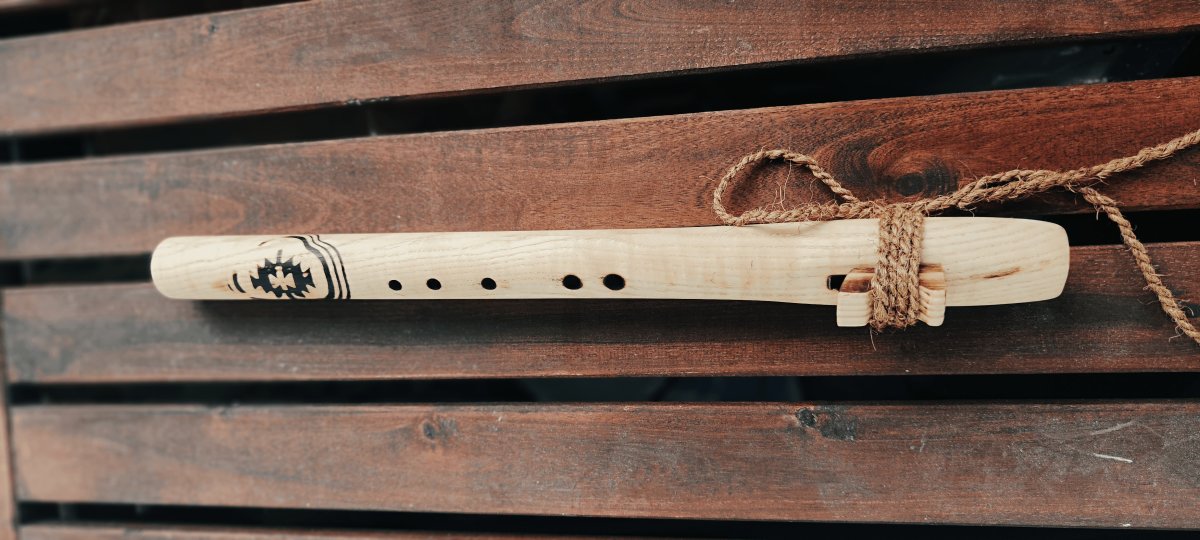
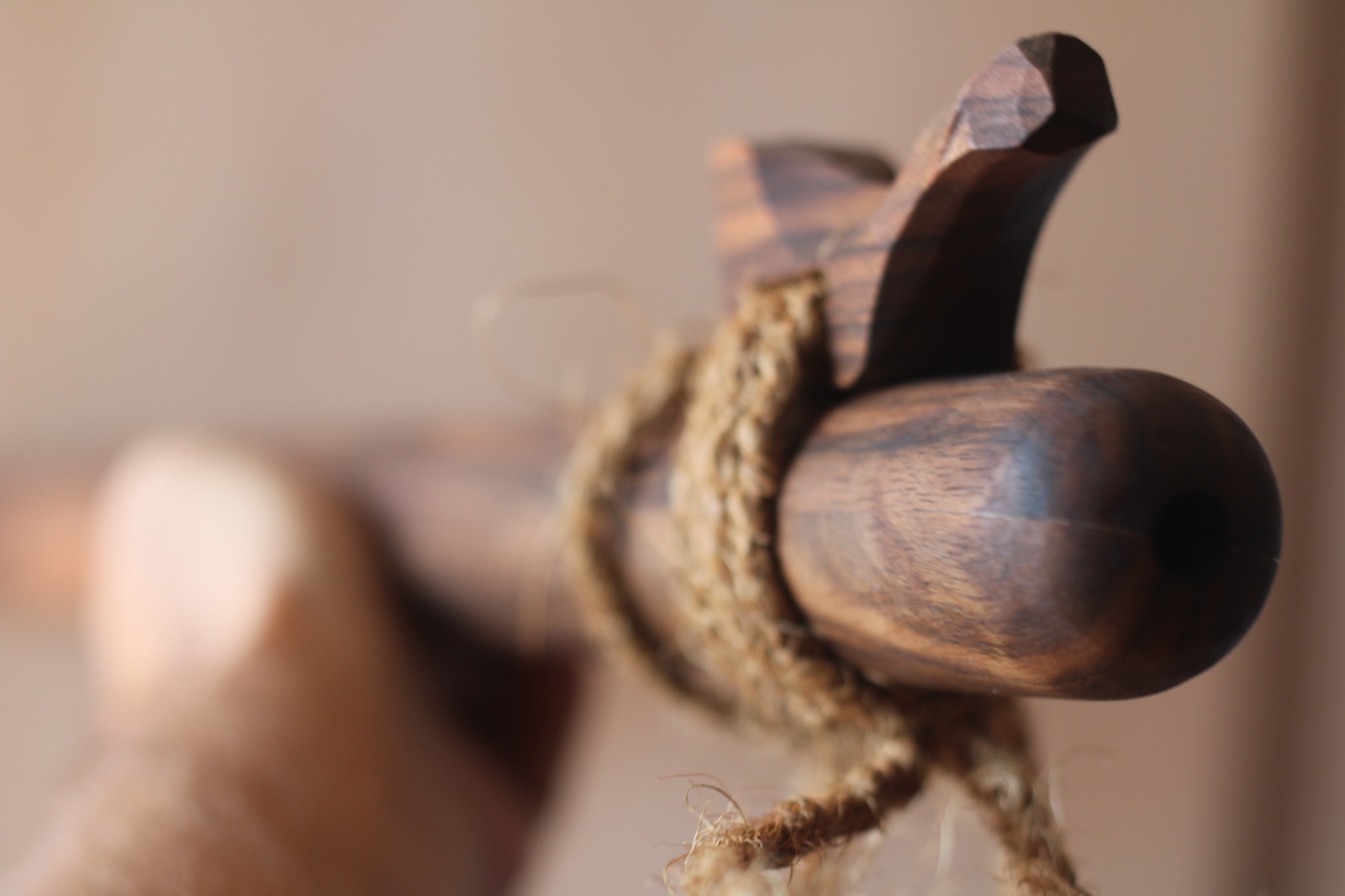
The block is the wooden piece on top of the flute, on ours usually shaped like a bird. It guides the air toward the small square hole in front of it. If it moves even a millimeter, the tone changes.
The rule is simple: the block must not cover the hole. It should sit just a little behind it, toward your mouth. If the front edge of the block slides over the hole, the air has nowhere to go and the flute hisses or does not play.
How to set it:
- Loosen the cord that holds the block a little.
- Play one long note and gently slide the block forward and back.
- When the tone is at its cleanest, leave it there.
- Check that the block sits straight, not at an angle, then tie the cord firmly.
2. Something is stuck in the air channel
Under the block there is a narrow channel that carries the air to the hole. One hair, crumb or bit of thread is enough to make the tone weak and fuzzy.
The fix:
- Untie the cord and take the block off.
- Look at the channel. If you see something, remove it.
- Slide a thin piece of paper or a business card through the channel. It pushes out anything that is stuck.
- Put the block back as in step one.
Do not use a knife, needle or anything sharp. It is easy to scratch the edge of the channel, and that edge is what makes the tone.
3. Dust
When a flute sits for a while, dust collects in the channel and on the edge of the hole. The easiest way to clean it:
- Take the block off.
- Blow hard through the channel and through the tube.
- Go over the channel and around the hole with a soft, dry brush (an old toothbrush works).
- Wipe the inside of the tube with a dry cloth wrapped around a thin stick.
No water and no soap. Wood soaks up water and can warp or crack. To keep dust away, store the flute in a cloth bag.
4. Moisture from your breath
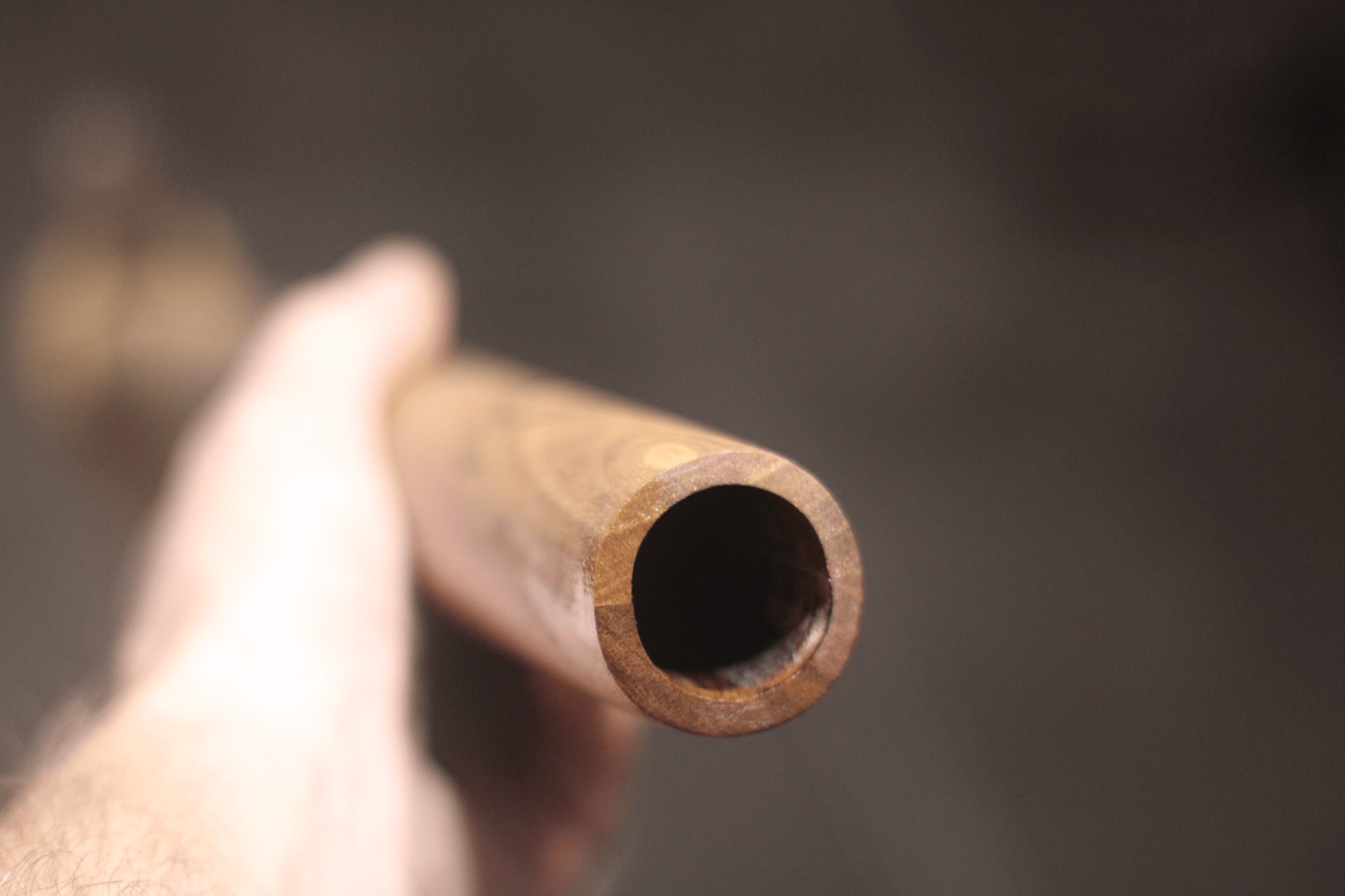
This is the most common cause, and people rarely expect it. Your breath is warm and wet. When you play for a long time, moisture builds up in the channel under the block and the tone starts to jump, squeak or disappears.
What to do:
- Turn the flute so the block faces down and blow hard. The water sprays out from under the block.
- If that does not help, take the block off and let the flute dry.
- Do not swing the flute to shake the water out. The block can fly off.
How to prevent it:
- Warm a cold flute first, in your hands or with warm breath through the holes. Cold wood collects moisture faster.
- Do not play right after eating or drinking.
- After playing, let the flute dry before you put it in its bag.
5. A cold flute plays flat
When the flute is cold, every note sounds a bit lower and it seems out of tune. That is normal. Cold air in the tube lowers the pitch. Once you warm the flute in your hands or play for a few minutes, the tone comes back where it should be.
So do not tune or check a flute while it is cold. Warm it up first, then check it with our online tuner.
6. Maybe it is not the flute: breath and fingers
If the flute jumps up into a high, sharp tone, the reason is usually too much air. This happens most on low flutes. Blow slower and softer, like when you warm your hands with your breath on a cold day.
If only one note sounds airy or squeaks, check your fingers. Even a small gap under one finger changes the tone. Cover the holes with the flat, soft pads of your fingers, not the tips.
Try these two things before you touch the block. More about this in our tips for beginners.
7. Care: oiling the wood
This is rarely needed: only every six months to a year, and only when you notice the wood is dry. It is not something you do regularly.
Our flutes are finished with olive oil and beeswax. Over time the wood soaks up the oil and gets dry. You notice it when the wood looks pale and dull, or feels rough under your fingers.
That is when you oil it:
- Put a little olive oil on a soft cloth.
- Wipe a thin layer over the outside of the flute.
- Leave it for 15 to 30 minutes so the wood can take in the oil.
- Wipe off the extra with a dry cloth.
Keep oil out of the air channel under the block. There it collects dust and gets sticky. Leave the channel and the edge of the hole dry.
Each time the wood takes in a bit more and stays saturated longer. After a few rounds there comes a point when the wood does not need oil anymore. From then on, an occasional wipe with a dry cloth is enough.
Where to keep your flute
Wood does not like sudden changes. Do not leave the flute in a car in the sun, next to a radiator or in a cold room. The best place is a cloth bag at room temperature.
If none of this helps
If you have checked the block, the channel and the moisture, and the flute still does not sound right, write to us. Send a short recording of the sound and we will find a fix together. If you are just starting out, see our tips for beginners.