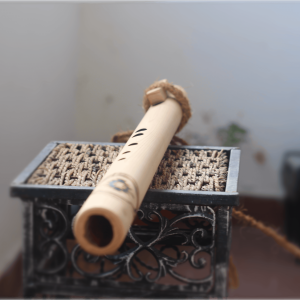
The theme from The Last of the Mohicans is the tune people ask for most when they hear a native flute. It is a short melody, twelve phrases in about a minute, and it fits on a 5-hole flute with one exception: a C that the flute does not have in its basic scale. Below is the theme as I play it on my Low E flute, note for note: the seven notes with their fingerings, every phrase with a short tip, the one hard note and how I play it, and a free PDF tab that matches the video.
Download the free PDF tab (3 pages)
The full lesson: 0:00 the theme, 0:16 the seven notes, 0:31 phrase by phrase, 1:44 the hard note, 1:51 the whole tune to play along. Chapters are in the video's description.
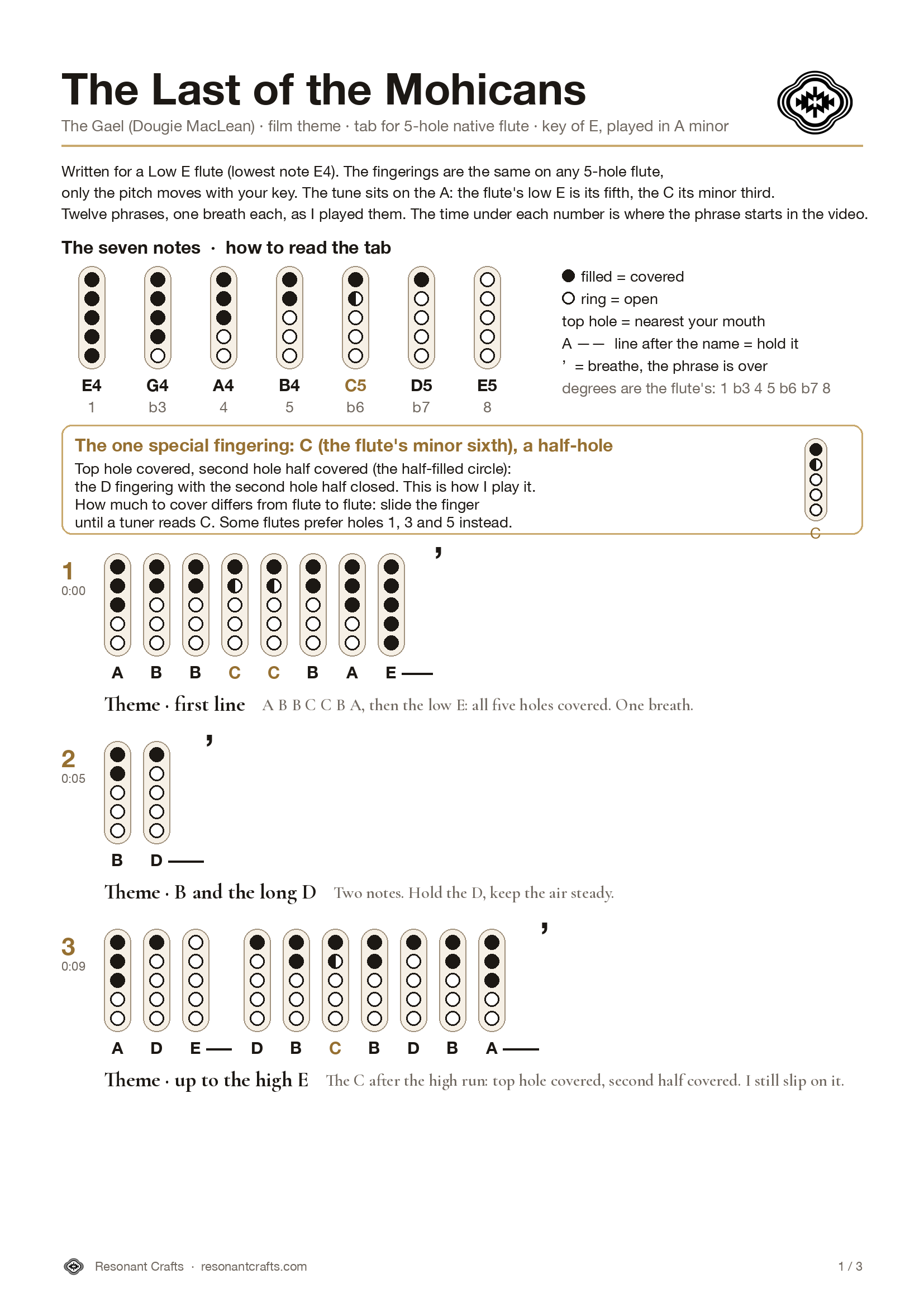
The seven notes
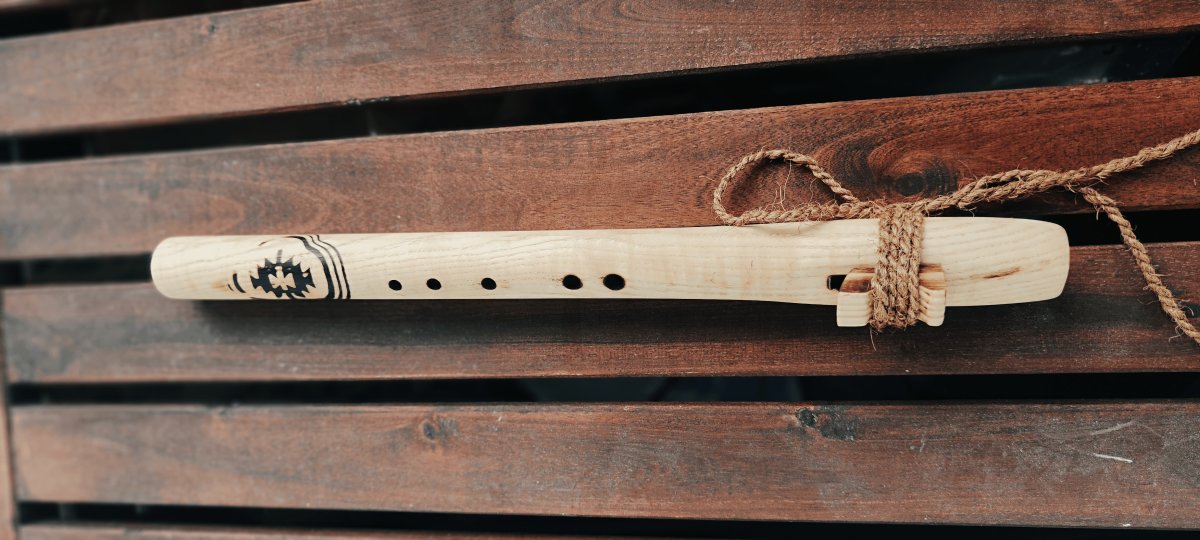
On the E flute the theme sits in A minor, so the low E is the fifth of the tune, not its root. That is why the melody keeps landing on A and B, and why the low E sounds like a resting place rather than a home. Top hole nearest your mouth, filled circle is covered, ring is open, half-filled is a half-covered hole.
| Note | Holes (top to bottom) | In the tune |
|---|---|---|
| E (low) | ● ● ● ● ● | low 5 |
| G | ● ● ● ● ○ | low b7 |
| A | ● ● ● ○ ○ | 1, the root of the tune |
| B | ● ● ○ ○ ○ | 2 |
| C | ● ◐ ○ ○ ○ | b3, the hard one |
| D | ● ○ ○ ○ ○ | 4 |
| E (high) | ○ ○ ○ ○ ○ | 5 |
Six of these are the plain pentatonic notes of the flute. The C is not: it sits between B and D, and you have to make it.
The C, the note I still miss sometimes
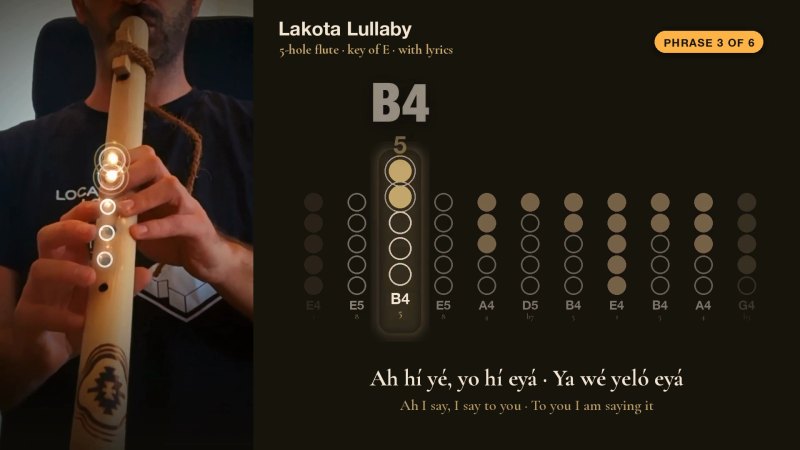
I play the C as the D fingering with the second hole half covered: top hole closed, second finger sliding over half of its hole, the rest open. It is a sliding note. Start from D, roll the second finger onto the hole until the pitch drops a half step, and stop there. The exact spot is different on every flute, so find it with a tuner once and remember how it feels under the finger.
Many fingering charts give the C as a cross fingering instead, holes 1, 3 and 5 covered. On my Low E that fingering comes out as C sharp, too high, which is why I half-hole it. Try both on your flute and keep the one that reads C on the tuner.
In the video the C in phrase 3 comes out sharp. I left it in. It is the note I still miss sometimes, and it is the note you will miss too, so you know where to slow down.
How to read the tab
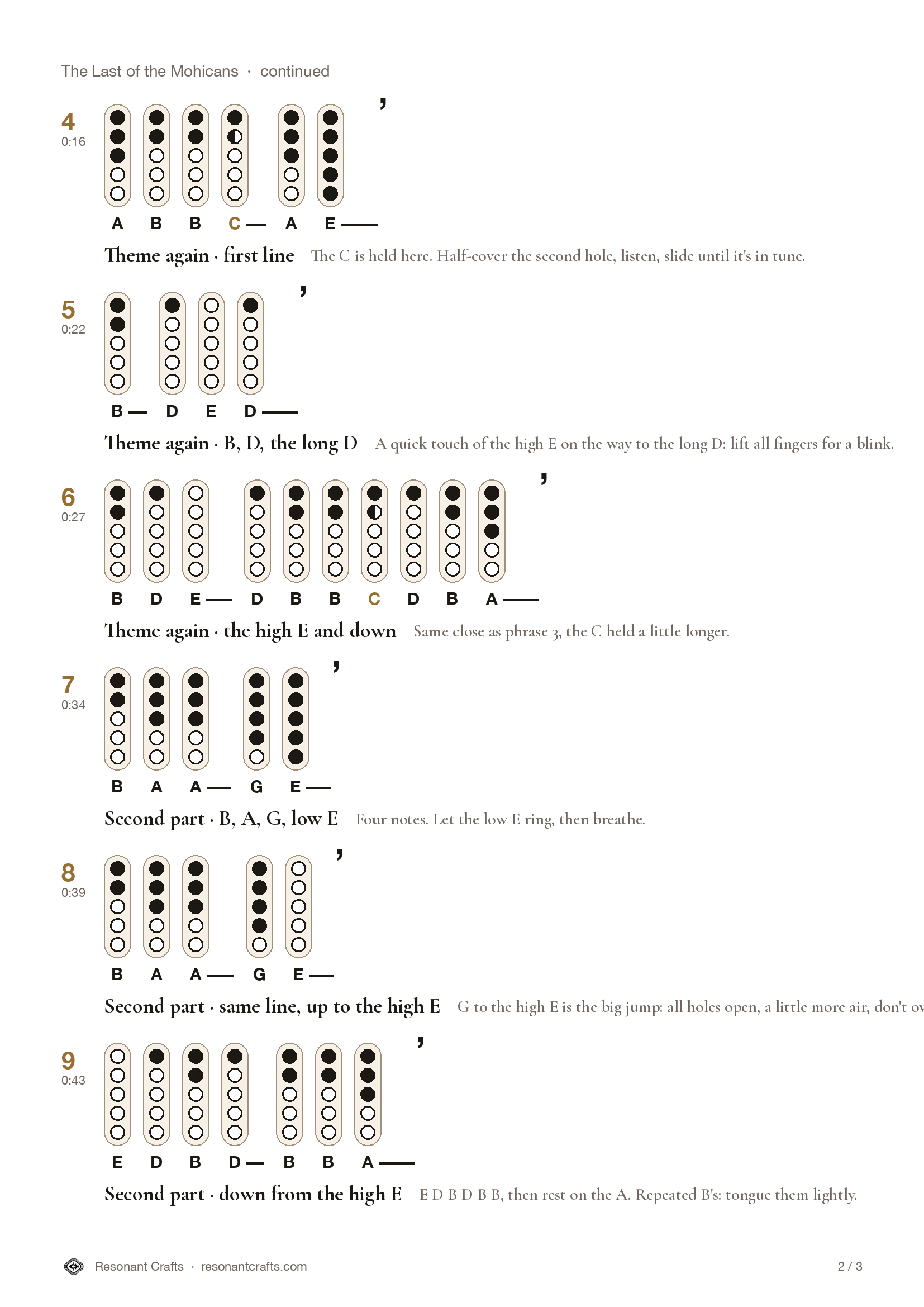
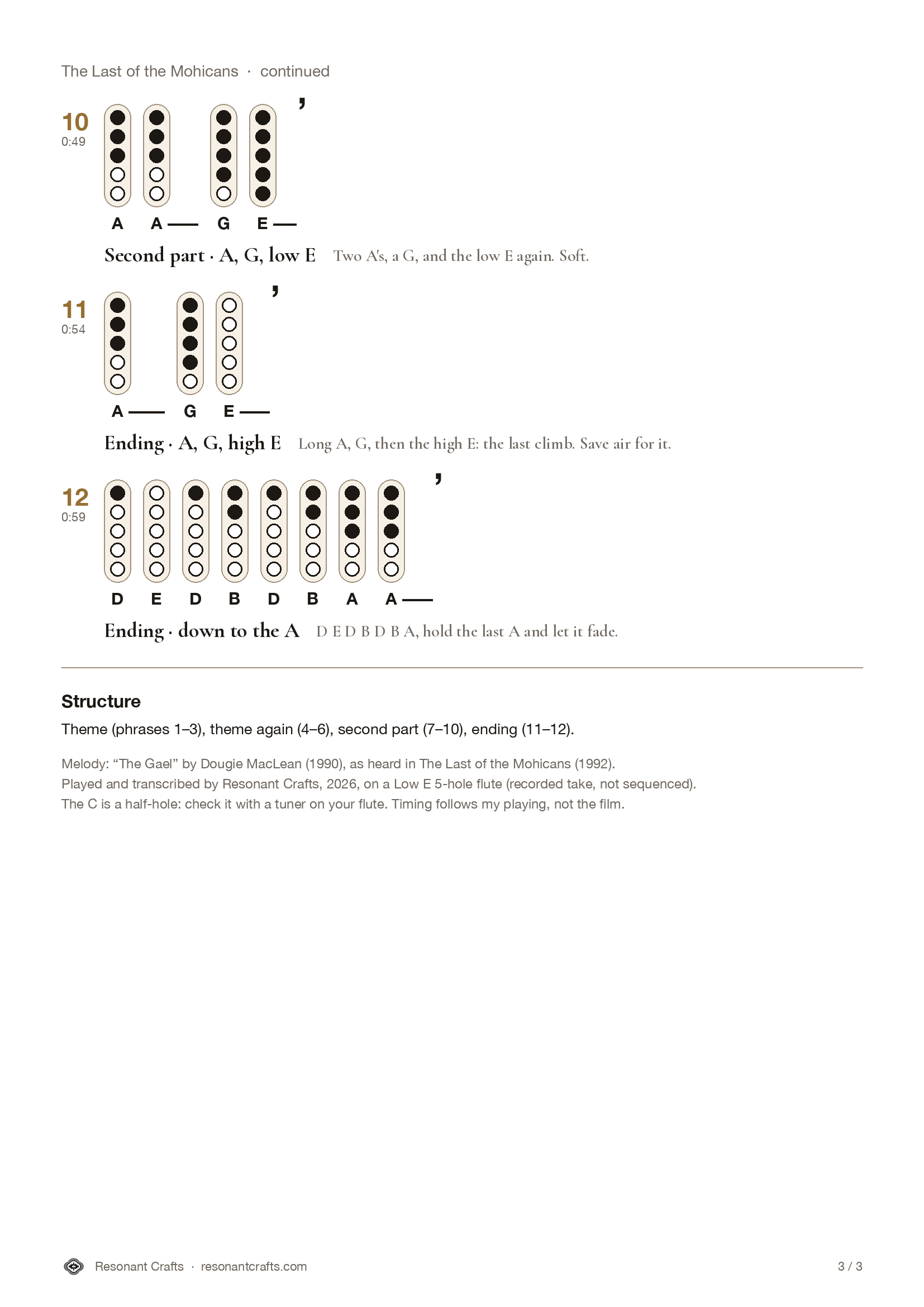
Each row of the tab is one phrase. Above each flute glyph is the note name; the C is printed in gold so you can see the hard note coming. The time at the start of each row is where the phrase begins in the play-along. Notes written once are held as long as they sound in the video.
Phrase by phrase
The tune has four parts: the theme (phrases 1 to 3), the theme again (4 to 6), a second part (7 to 10) and the ending (11 and 12). Learn the theme first. Half the tune is in those three phrases.
| Phrase | Time | Notes | Tip |
|---|---|---|---|
| 1 · theme | 0:00 | A B B C C B A E | One breath. The C is held: half-cover the second hole and listen. All five holes covered for the low E at the end. |
| 2 | 0:05 | B D | Two notes. Hold the D, keep the air steady. |
| 3 | 0:09 | A D E' D B C B D B A | Up to the high E, then down. The C after the high run is the one I slip on. |
| 4 · theme again | 0:16 | A B B C A E | The C is held here. Slide the second finger until it is in tune. |
| 5 | 0:22 | B D E' D | A quick touch of the high E on the way to the long D: lift all fingers for a blink. |
| 6 | 0:27 | B D E' D B B C D B A | Same close as phrase 3, the C held a little longer. |
| 7 · second part | 0:34 | B A A G E | Four notes going down. Let the low E ring, then breathe. |
| 8 | 0:39 | B A A G E' | Same line, but it ends on the high E. G to high E is the big jump: all holes open, a little more air, not too much. |
| 9 | 0:43 | E' D B D B B A | Down from the high E. Repeated B's: tongue them lightly. |
| 10 | 0:49 | A A G E | Two A's, a G, and the low E again. Soft. |
| 11 · ending | 0:54 | A G E' | Long A, G, then the high E: the last climb. Save air for it. |
| 12 | 0:59 | D E' D B D B A A | Hold the last A and let it fade. |
E' is the high E, all holes open.
Two places that need air, not fingers
The jump from G to the high E in phrase 8 and the climb to the high E in phrase 11 are where most people crack the note. The fingers are easy, everything opens. What changes is the air: a little faster for the high E, and it has to be there before the fingers move, not after. If the high E squeaks, you are pushing. If it does not speak, you are not giving it enough. Play G to high E on its own twenty times before you play the phrase.
Playing along
The video shows each phrase once with the holes lit on the real flute and the tab moving beside it, then the whole theme for you to play along. The Shorts split it into four parts: the theme, the theme again, the second part and the ending. Start with part 1 and stay there until the C is in tune.
- Breathe between phrases. Every phrase in the tab is one breath.
- Play the C long and slow before you play it in time. A slid note takes a moment to find.
- Quick ornaments in the video are not in the tab. The plain notes come first.
About the tune
The melody is The Gael, written by Dougie MacLean in 1990. It became the main theme of the 1992 film The Last of the Mohicans, where most people know it from. What I play here is the theme as it is heard in the film, in the flute's fourth so that it fits on five holes with a single made note.
What key is your flute?
The tab is for an E flute, but the fingerings are the same on every 5-hole flute; only the pitch moves. On a D flute the tune comes out in G minor, on an A flute in D minor, and the C in the table becomes the note a half step above the one you get with two holes covered (the B on an E flute). The half-hole trick works the same way. Check your low note on our online tuner and tell me your key, I will tell you which note the hard one is on yours.
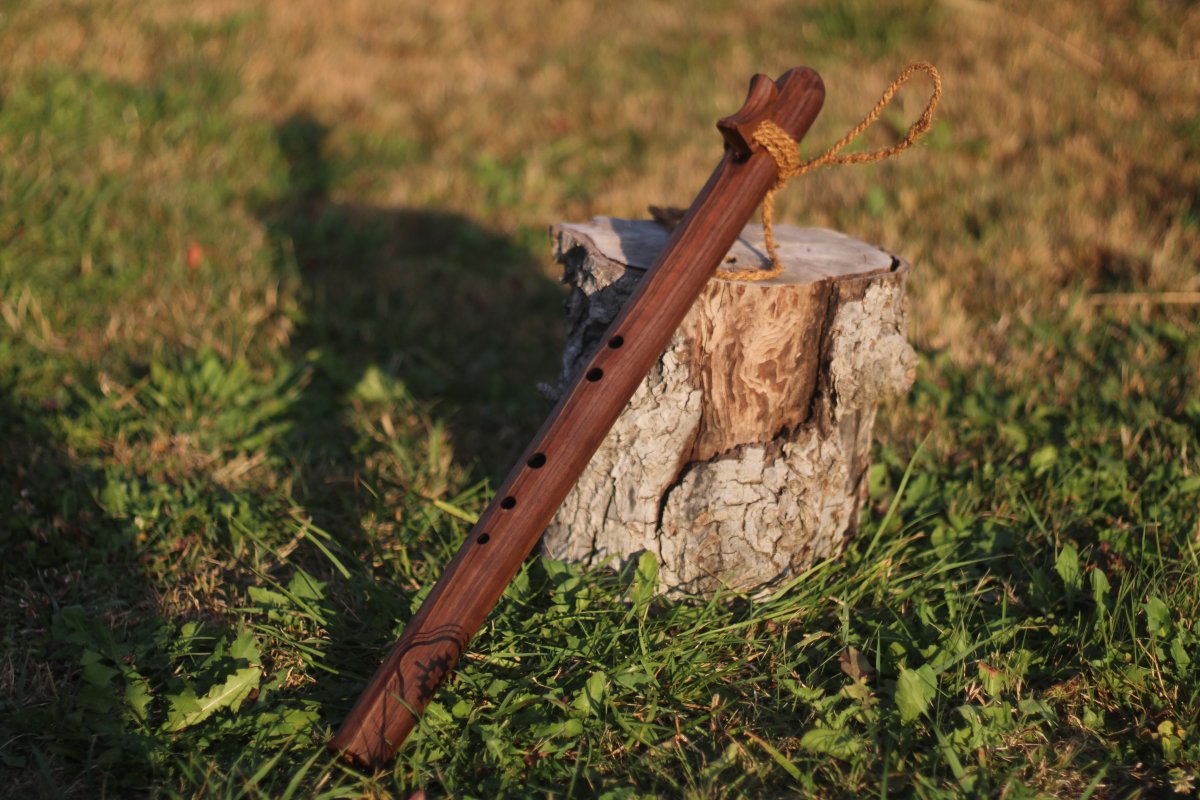
Handmade 5-hole flutes in E and other keys: see the flutes.